Being in a car accident that someone else caused should, in theory, be straightforward. They were at fault, their insurance pays, and you move on with your life. In practice, it rarely works that cleanly. Insurance companies, including the other driver’s, are not in the business of handing out maximum payouts without being asked the right questions first. Most people walk away from an accident that was not their fault having claimed only a fraction of what they were actually entitled to, simply because nobody explained the full scope of what a claim can actually include.
Here is what you can realistically claim, and why most people leave money on the table without realizing it.
Vehicle Damage Is Only the Starting Point
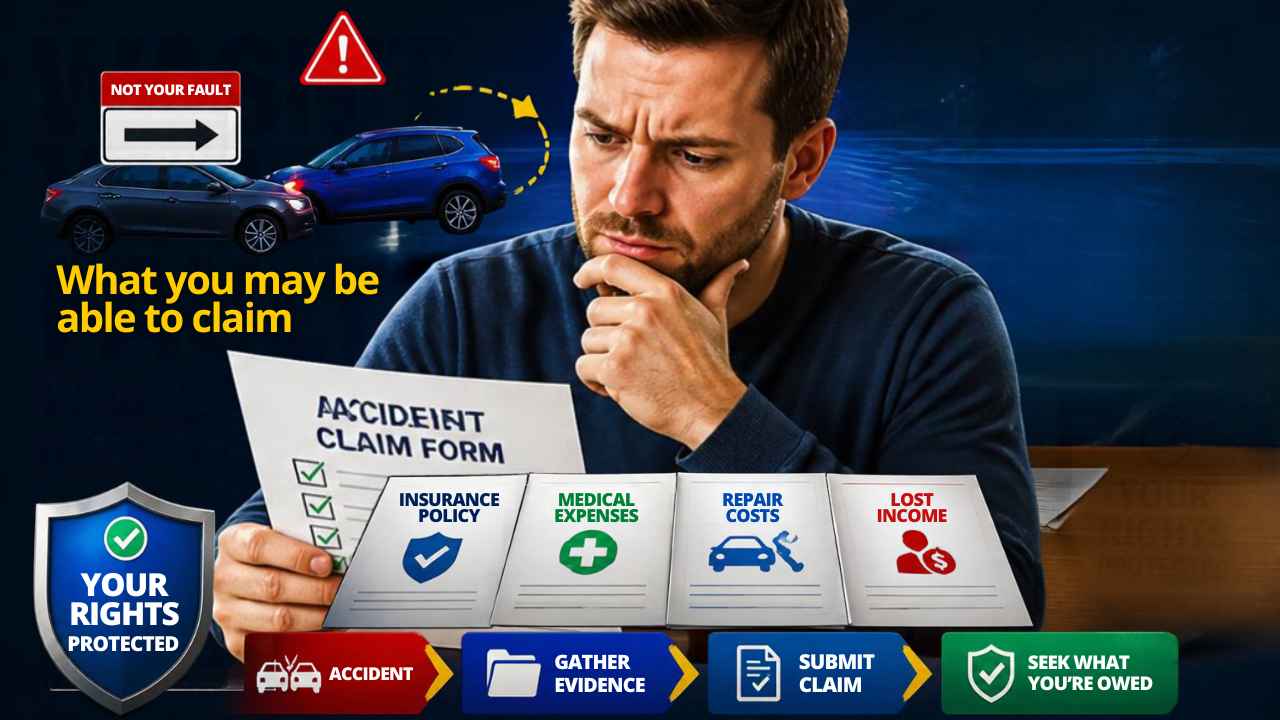
The most obvious claim after an accident is for damage to your car, and most people at least know to pursue this. What they often miss is that vehicle related compensation extends beyond just the repair bill.
If your car needs repairs, you are typically entitled to a rental vehicle or reimbursement for alternative transportation while the repairs are being completed, not just the cost of the repairs themselves. If the damage is severe enough that your car is declared a total loss, you are generally owed the actual cash value of the vehicle before the accident, not simply what you personally think it was worth or what you still owe on a loan. This distinction matters, because actual cash value calculations can sometimes come in lower than expected, and understanding how that number is calculated gives you room to push back if it seems inaccurate.
Diminished value is another piece that gets missed constantly. Even after a full repair, a vehicle that has been in a significant accident is often worth less on the resale market simply because of its accident history. In many cases, you can claim this loss in value separately from the repair costs themselves, though it requires specifically requesting it, since it is rarely offered automatically.
Medical Expenses Cover More Than the Immediate Treatment
Medical costs from an accident are not limited to the emergency room visit or the initial diagnosis. Ongoing treatment, physical therapy, chiropractic care, prescription medications, and any medical equipment needed during recovery generally fall under what you can claim, as long as it is clearly connected to the accident.
This is also where timing becomes important. Some injuries, particularly soft tissue injuries or concussions, do not show their full severity immediately. Symptoms can develop or worsen over the following days or weeks. This is part of why accepting a quick settlement offer shortly after an accident can be a costly mistake. Once you settle, you typically cannot go back and ask for more if it turns out your injury was more serious than it initially appeared.
Lost Income Includes More Than Missed Paychecks
If the accident kept you out of work, you can generally claim lost wages for the time you were unable to work as a direct result of your injuries. What a lot of people do not realize is that this can extend beyond simply missing shifts.
If your injury reduced your capacity to work, requiring reduced hours, lighter duties, or a temporary change in role at lower pay, that difference in income is often claimable as well. If you are self employed, lost income can be more complicated to document, but it is still generally claimable, and it typically requires more thorough financial records to support the claim, such as past earnings history or lost contracts.
In more serious cases involving long term or permanent injury, loss of future earning capacity can also become part of a claim, particularly if the injury affects your ability to perform your job long term or limits future career options. This is a category many people do not even know exists, simply because it only becomes relevant in more serious injury cases.
Pain and Suffering Is Real Compensation, Not Just a Phrase
Pain and suffering compensation covers the physical pain, emotional distress, and overall reduction in quality of life caused by the accident, separate from your actual medical bills. This is one of the most misunderstood parts of a claim, partly because it does not come with a receipt the way medical expenses or vehicle repairs do.
Insurance companies often use formulas or internal guidelines to estimate this figure, frequently based on a multiple of your medical expenses, but these initial calculations tend to favor the insurer, not you. Detailed documentation, including a personal record of how the injury has affected your daily life, your sleep, your ability to do things you normally do, and any emotional impact, can significantly strengthen this part of a claim and push back against a lowball initial offer.
Property Damage Beyond the Vehicle Itself
If personal belongings inside your car were damaged in the accident, a phone, glasses, a car seat, equipment, these items are often claimable separately from the vehicle damage itself. Many people forget to include this simply because their attention is focused entirely on the car and their physical injuries in the aftermath.
Why Insurance Companies Do Not Volunteer All of This
It is worth being clear about why so much of this gets missed. The at fault driver’s insurance company is not working for you. Their financial interest is in resolving your claim for as little as possible, and they are not obligated to walk you through every category of compensation you might be entitled to. Adjusters are trained to move claims efficiently, and an efficient claim, from their perspective, is often a cheaper one.
This is not necessarily malicious. It is simply how the incentive structure works. The responsibility to understand and pursue the full scope of a claim falls on the person who was injured, which is exactly why so many legitimate claims end up settled for far less than they were worth.
The Danger of Settling Too Early
One of the most common and costly mistakes after a not at fault accident is accepting an early settlement offer before the full extent of your injuries and losses is clear. Early offers are often presented while you are still dealing with medical bills, missed work, and the general stress of the aftermath, which makes them tempting to accept quickly.
The problem is that once a settlement is signed, it is typically final. If a soft tissue injury turns out to require months of additional physical therapy, or if a seemingly minor injury develops into something more serious, you generally cannot go back and ask for more once you have already settled. Waiting until you have a clearer picture of your medical prognosis before agreeing to any settlement protects you from this exact scenario.
What to Do to Protect Your Full Claim
A few habits make a significant difference in what you are ultimately able to claim. Documenting everything from the start, photos of the vehicle damage, the accident scene, and any visible injuries, creates a foundation the rest of your claim can build on. Keeping a personal log of medical appointments, missed work, and how your recovery is progressing over time provides evidence that is much harder to dispute later than a vague recollection would be.
Being cautious about early conversations with the other driver’s insurance company matters as well. Recorded statements given soon after an accident, before you fully understand your injuries, can sometimes be used to minimize your claim later. It is reasonable to provide basic factual information while declining to speculate about injuries or fault until you have a clearer picture.
Finally, getting a second opinion on any settlement offer before accepting it, particularly if the accident involved significant injury, is one of the simplest ways to avoid leaving money on the table. What sounds like a reasonable number in the moment is often lower than what a full accounting of your damages would actually support.
The Bottom Line
A car accident that was not your fault should result in full compensation for everything the accident actually cost you, not just the most obvious and easiest to calculate pieces. Vehicle damage, medical expenses, lost income, pain and suffering, and diminished value are all generally claimable, but very little of it gets offered automatically. Most people who walk away with less than they deserve are not victims of a broken system. They are victims of accepting the first number offered without understanding everything they were entitled to ask for.