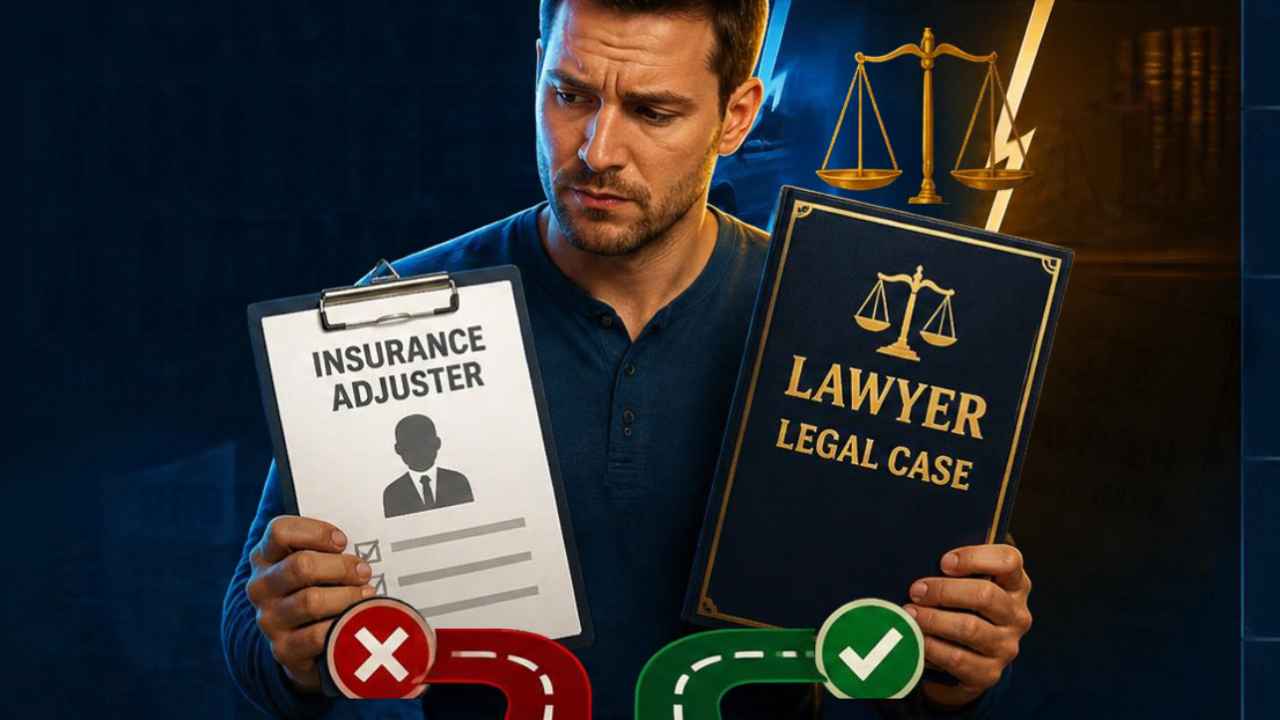
After an accident or injury, most people start out dealing with an insurance adjuster because that feels like the natural first step. The adjuster asks questions, requests documents, and eventually makes an offer, and for a lot of straightforward cases, that process resolves things reasonably well. The problem is that not every case is straightforward, and the adjuster’s job is not actually to make sure you get what you deserve. Their job is to resolve your claim for as little as the company can reasonably get away with.
Most of the time, this distinction does not matter much. But there are specific situations where relying only on an adjuster, without ever bringing in a lawyer, puts you at a real disadvantage. Here are the signs that your situation has crossed that line.
1. The Injury Is Serious, Ongoing, or Has an Uncertain Recovery Timeline
If your injury involved surgery, hospitalization, or any diagnosis where the doctor cannot yet tell you exactly when or how fully you will recover, this is one of the clearest signals that an adjuster alone is not enough. Adjusters work with numbers, and their formulas for calculating a settlement often rely heavily on your medical expenses to date and a fairly conservative estimate of future treatment.
The problem is that serious injuries do not always follow a predictable timeline. A back injury might require additional treatment a year later. A concussion might produce lingering effects that were not obvious in the first few weeks. Once you accept a settlement, it is almost always final, which means settling before your recovery is clear can leave you covering future medical costs entirely out of your own pocket, for an injury that was never actually your fault.
A lawyer’s role here is not just negotiation. It is making sure any settlement accounts for the realistic long term picture of your recovery, not just the bills that have accumulated so far.
2. Fault Is Being Disputed or Is Genuinely Unclear
When fault is obvious, an adjuster’s job is relatively simple, and the process tends to move fairly smoothly. But when the other party’s insurance company is disputing fault entirely, or trying to assign partial fault to you, the dynamics change significantly.
Many places use rules where your compensation can be reduced, sometimes dramatically, based on the percentage of fault assigned to you. This means an insurance company disputing even twenty or thirty percent of fault can meaningfully shrink your payout, even if the disagreement is not especially strong on the facts. Insurance companies know this, and disputing fault, even weakly, is a common tactic specifically because it works often enough to be worth trying.
If you are getting pushback on fault, especially if it feels inconsistent with what actually happened, this is a strong sign you need someone building a case on your behalf rather than simply responding to whatever the adjuster claims.
3. The Settlement Offer Feels Disconnected From Your Actual Losses
Insurance adjusters often make an initial offer relatively early, sometimes surprisingly early, before the full scope of your medical treatment, lost income, or other damages is even clear. These early offers are frequently lower than what a full accounting of your situation would actually support, and they are often presented at a moment when accepting quickly feels tempting, especially if bills are piling up.
If you find yourself doing the math and the numbers simply do not add up to cover what you have actually lost, medical bills, missed income, ongoing treatment, and the offer still feels like it is treating your situation as smaller than it actually is, that gap is worth taking seriously. Adjusters are not required to explain every category of compensation you might be entitled to, and a lowball offer is not necessarily a mistake on their part. It is often simply the starting point of a negotiation they expect you to accept without pushing back.
A lawyer’s presence alone often changes the size of the offers being made, not because of aggressive tactics, but because insurance companies know a represented claimant is far less likely to accept an offer that undervalues the actual damages.
4. Multiple Parties or Insurance Policies Are Involved
Straightforward accidents with one clearly at fault driver and one clear victim are relatively simple to navigate. But accidents involving multiple vehicles, a commercial vehicle, a rideshare driver, a defective vehicle part, or any situation where more than one insurance policy might apply become significantly more complicated very quickly.
In these situations, multiple insurance companies may all be trying to minimize their own share of the liability, sometimes pointing fingers at each other in ways that leave you caught in the middle trying to sort out who actually owes what. Coordinating a claim across multiple parties, each represented by their own adjuster working in their own company’s interest, is not something most people are equipped to manage on their own, and it is exactly the kind of situation where a lawyer’s experience navigating overlapping claims becomes genuinely valuable rather than optional.
5. You Are Being Asked to Sign Something You Do Not Fully Understand
Insurance companies sometimes present documents, medical authorization releases, settlement agreements, or statements, that sound routine but carry significant consequences once signed. A broad medical authorization release, for example, might give the insurance company access to your entire medical history, not just records related to the current injury, which they can sometimes use to argue that a prior condition, not the accident, is responsible for your symptoms.
A settlement agreement, once signed, is typically final and prevents you from seeking additional compensation later, even if your situation changes. If you are ever handed a document and you do not fully understand what you are agreeing to, or what rights you might be giving up by signing it, that uncertainty by itself is reason enough to have a lawyer review it before you put your name on anything. The cost of a quick review is minor compared to the cost of signing away a right you did not realize you were giving up.
Why This Distinction Actually Matters
The adjuster you are speaking with is a trained professional, but they are trained to protect their employer’s financial interests, not yours. This does not make every adjuster dishonest, but it does mean the entire process is built around a structural imbalance. They know the claims process, the typical timelines, the common tactics, and the formulas used to minimize payouts. Most injured people are navigating this process for the first time, often while also dealing with pain, missed work, and financial stress, which is exactly the environment where mistakes and undervalued settlements happen most often.
Bringing in a lawyer does not necessarily mean your case is heading to a courtroom. The vast majority of these cases still settle, often faster and for more than they would have otherwise, simply because a lawyer levels the playing field in terms of knowledge, leverage, and the credible threat of pursuing the claim further if the offer does not reflect the actual damages.
The Bottom Line
Not every accident or injury requires a lawyer, and plenty of minor, clear cut situations resolve fairly through the standard adjuster process. But when your injury is serious or uncertain, when fault is being disputed, when the offer does not match your actual losses, when multiple parties are involved, or when you are being asked to sign something you do not fully understand, relying solely on an adjuster puts you at a real disadvantage in a process that was never designed to work in your favor by default.
If any of these signs sound familiar, a conversation with a lawyer, many of whom offer a free initial consultation, costs you nothing to explore and can make the difference between a settlement that reflects what actually happened to you and one that simply reflects what the insurance company hoped you would accept without asking questions.