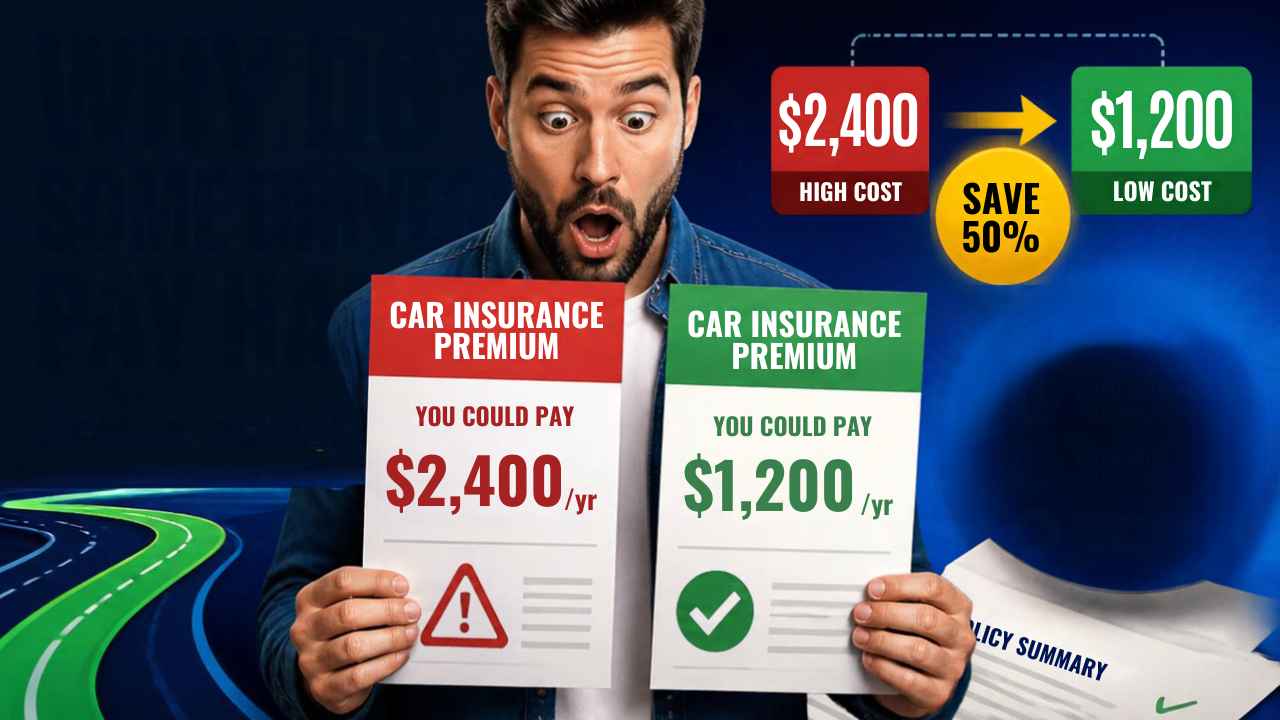
Ask around and you will almost always find someone who pays noticeably less for car insurance than a friend or family member, even though both of them drive similar cars and have similar records. It can feel almost random from the outside, like some people simply got lucky. In reality, the gap usually comes down to a specific set of factors that most drivers never think to question. Insurance pricing is not one flat number handed out equally. It is built from dozens of small variables, and the drivers paying half as much are usually doing a handful of things differently, whether they realize it or not.
Here is what actually separates the low payers from everyone else.
They Treat Their Policy as Negotiable, Not Fixed
The biggest mindset difference is simple. Drivers who pay less do not assume their premium is locked in. They understand that the price on their renewal notice is a starting offer, not a final verdict, and they act accordingly by comparing rates and asking questions rather than accepting whatever number shows up in their inbox.
Insurance companies price policies based on risk models, but those models are not identical across providers. One insurer might weigh your age heavily, another might weigh your location more, and a third might care more about your annual mileage. That means the same driver can get wildly different quotes from different companies for identical coverage. The people paying half as much are usually the ones who took the time to find the insurer whose risk model happens to favor their specific situation.
Their Driving Record Is Genuinely Clean, Not Just Recently Clean
A single at-fault accident or a couple of speeding tickets can stay on your record for years and quietly inflate your premium the entire time. Drivers with the lowest rates typically have a long stretch, often three to five years or more, completely free of claims or violations.
This is not always about being a more careful driver in the moment. It is often about consistency over time. Someone who avoids minor claims, like a small parking lot scrape, and pays out of pocket instead of filing, protects their long-term rate in a way that adds up significantly. Filing a claim for a minor repair might save you a few hundred dollars today, but it can raise your premium by more than that over the following years.
They Chose Their Vehicle With Insurance Costs in Mind
Not all cars are priced equally when it comes to insurance, and the difference can be substantial. Vehicles with a history of frequent theft, expensive parts, or higher accident rates come with higher premiums attached, regardless of how safely you drive them.
Drivers paying less often own vehicles that are cheaper to repair, less commonly stolen, and equipped with strong safety ratings. This does not mean everyone needs to trade in their car, but it does explain a meaningful chunk of the price gap between two drivers who otherwise look similar on paper. Before buying a new vehicle, checking how it affects insurance costs can prevent an unpleasant surprise later.
They Bundle Everything Under One Provider
Combining auto insurance with renters, homeowners, or life insurance under a single company is one of the most consistent ways to lower a premium, and it is also one of the most underused. Many drivers keep their policies scattered across different providers simply because that is how things happened to be set up over time, not because it was ever a deliberate choice.
The drivers getting the better deal usually consolidated their policies at some point and asked directly what kind of discount bundling would unlock. In many cases, the savings from this alone rival what you would get from switching providers entirely.
They Actively Manage Their Credit
In many regions, credit history plays a real role in how car insurance is priced. It is one of the least intuitive factors, since it has nothing to do with driving behavior, but insurers use it as a general indicator of financial risk.
People who consistently pay less for insurance often have strong credit habits, not because they were specifically optimizing for insurance rates, but because those habits carry over. Low credit utilization, on-time payments, and a longer credit history tend to correlate with lower premiums. If your credit has improved since you first signed up for your policy, it is worth checking whether that improvement has ever been reflected in your rate.
They Ask About Every Discount Instead of Assuming None Apply
Discounts for low mileage, safe driving courses, student status, certain professions, paying annually instead of monthly, and even having certain safety features installed in the vehicle are common, but insurers rarely advertise all of them upfront. The responsibility usually falls on the driver to ask.
The people paying significantly less are often just more thorough. They call their provider once a year and ask a simple, direct question: what discounts am I eligible for that I am not currently receiving. That one question alone has uncovered meaningful savings for a lot of drivers who assumed they were already getting the best possible rate.
They Reassess Their Coverage as Life Changes
A policy built around your life five years ago may not reflect your life today. Fewer miles driven because of remote work, a paid off car loan that removes a lender requirement for full coverage, or a move to a lower risk area can all justify adjusting your policy, but only if you actually revisit it.
Drivers who consistently pay less tend to treat their policy as something to be reviewed periodically, not something set once and forgotten. A five minute conversation after a major life change, like a new job, a move, or a paid off vehicle, can lead to a real adjustment in what you are paying.
The Real Difference Is Attention, Not Luck
None of this comes down to secret discounts hidden from the average person. It comes down to attention. The drivers paying half as much are simply the ones who question their renewal instead of accepting it, who understand how a handful of specific factors affect their price, and who take a small amount of time each year to make sure their policy still fits their actual situation.
If your premium has not been reviewed in over a year, there is a real chance you are leaving money on the table without knowing it. The gap between what you are paying and what you could be paying is often smaller in effort than people expect, and larger in savings than most people assume.