When a parent or older relative starts needing more support, most families default to one of two options they already know about: keep managing things at home as best they can, or start looking into a nursing home or assisted living facility once things reach a crisis point. There is a middle option that a surprising number of families never seriously consider until they are already deep into a difficult situation, and by then, the decision is being made under pressure rather than with any real planning. Understanding this option earlier, before it becomes urgent, tends to lead to better outcomes and far less stress for everyone involved.
The Option Most Families Skip Entirely
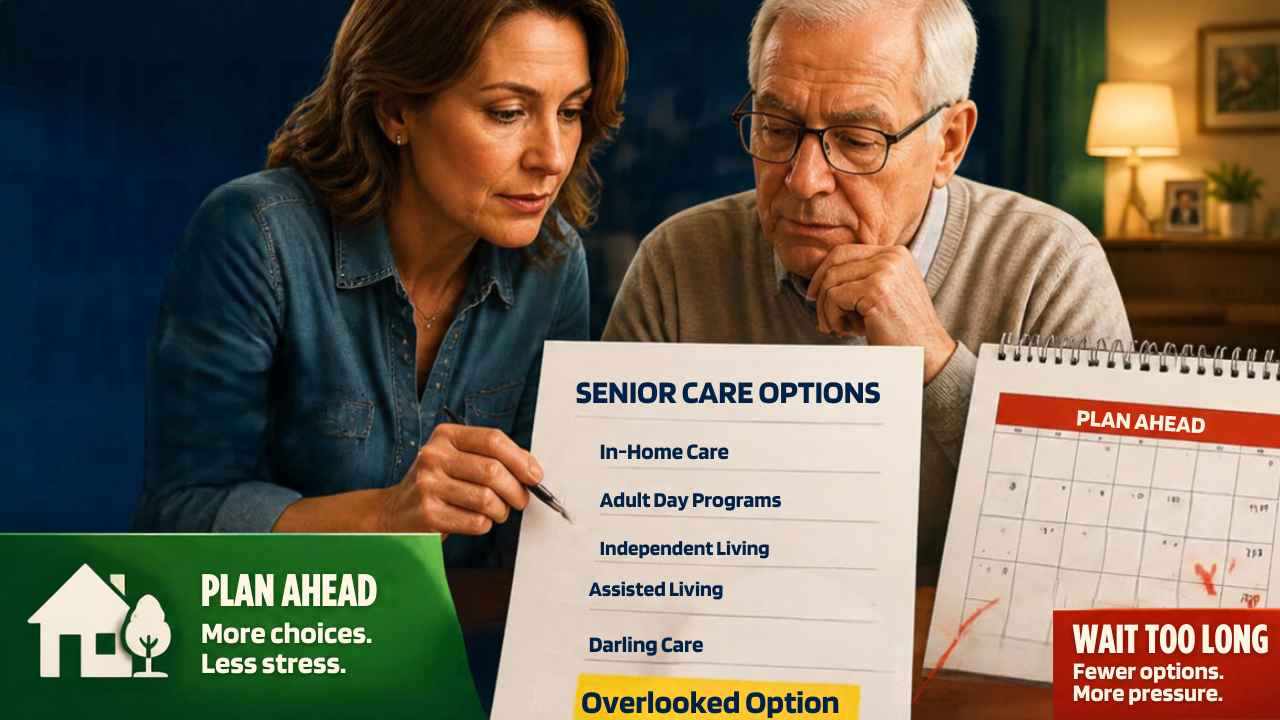
In-home professional care, hiring trained caregivers to come into a senior’s own home rather than moving them into a facility, exists in a wide range of forms, from a few hours a week of help with errands and light housekeeping, to full time live-in care for someone with more significant needs. Most families are vaguely aware this exists, but very few actually explore it seriously until a fall, a hospitalization, or a sudden decline forces the conversation.
The reason it gets overlooked is not that families do not care enough to look into it. It is that in-home care tends to fall into an awkward middle ground in most people’s minds. It feels like more than what a family can casually provide themselves, but somehow less serious than a full facility placement, which leads many families to skip past it mentally without ever really evaluating whether it actually fits their specific situation.
Why Waiting Until It’s Too Late Limits Your Options
The families who end up with the fewest choices are almost always the ones who did not start looking until an emergency forced the decision. A hospital discharge with only a few days notice, a sudden decline that makes home alone no longer safe, or a family caregiver reaching complete burnout, these are the moments when most families first seriously explore care options, and unfortunately, these are also the worst possible moments to make a calm, well researched decision.
When care decisions are made under this kind of pressure, families often default to whatever option is immediately available rather than the one that actually fits best. A facility with an open bed right now might get chosen simply because it is available, not because it was genuinely the best fit for the person’s needs, their personality, or their preference to remain in a familiar environment. In-home care, which typically requires a bit more lead time to set up properly, vetting agencies, arranging schedules, understanding costs, is often the first option eliminated simply because there was not enough runway to explore it before a decision had to be made.
What In-Home Care Actually Offers That Gets Underestimated
A properly arranged in-home care setup can provide a level of support that surprises a lot of families once they actually look into it seriously. This can include assistance with daily activities like bathing, dressing, and meal preparation, medication reminders, transportation to appointments, light housekeeping, and simply companionship and supervision for seniors who should not be alone for extended periods but do not require the intensive medical oversight of a nursing facility.
For many seniors, particularly in the earlier stages of needing additional support, remaining in a familiar home environment carries real value beyond just comfort. Familiar surroundings can reduce confusion and anxiety, particularly for anyone experiencing early cognitive changes, and maintaining existing routines and community connections, neighbors, a familiar pharmacy, a regular walking route, often supports overall wellbeing in ways that get lost in a facility transition.
This does not mean in-home care is always sufficient or always the right choice. For seniors with significant medical needs requiring round the clock skilled nursing care, a facility setting may genuinely be necessary. But for a large number of seniors in the earlier or middle stages of needing help, in-home care is a genuinely viable option that gets dismissed too quickly, often simply because nobody took the time to evaluate it properly before a crisis forced a faster decision.
The Cost Comparison Most Families Never Actually Run
A common assumption is that in-home care is automatically more expensive than facility care, which leads many families to rule it out without ever comparing actual numbers. The real comparison depends heavily on how many hours of care are actually needed.
For a senior who needs a moderate amount of support, a few hours a day or part time assistance rather than round the clock supervision, in-home care can sometimes cost significantly less than a full facility placement, since facility costs are generally structured around providing comprehensive care regardless of how much an individual resident actually needs on any given day. As care needs increase toward full time or live-in support, the cost gap between in-home care and facility care narrows considerably, and at the highest levels of need, facility care sometimes becomes the more cost effective option.
The mistake most families make is assuming the answer without actually running these numbers for their specific situation. A real comparison, based on the actual level of care needed rather than a general assumption about which option is cheaper, often reveals a very different picture than what most families expect going in.
Why Starting the Conversation Early Changes Everything
Families who begin exploring care options before a crisis hits have room to do several things that families in emergency mode simply do not have time for. They can interview multiple in-home care agencies and actually compare quality, not just accept whichever one has immediate availability. They can involve the senior themselves in the decision, which tends to lead to better acceptance of the care arrangement and less resistance than a decision made for them during a hospital discharge. They can also explore a gradual increase in care, starting with a few hours a week and expanding as needs grow, rather than jumping straight to a more intensive arrangement that may not have been necessary yet.
This gradual approach also gives families time to understand what specific care needs actually look like in practice, which helps avoid both underestimating what support is needed and overpaying for a level of care that was not yet necessary.
How to Start Exploring This Before It Becomes Urgent
The most useful first step is simply having an honest conversation with the senior in question about how they are actually managing day to day tasks, not just how they say they are managing when asked directly, since many seniors understate their difficulties out of a desire to maintain independence or avoid worrying family members. Paying attention to specific signs, missed medications, unopened mail piling up, changes in hygiene or home cleanliness, difficulty with stairs or mobility, provides a more accurate picture than a general check-in conversation alone.
From there, researching in-home care agencies in the area, understanding typical costs for different levels of care, and getting a sense of what services are actually available locally, before any of it is urgently needed, puts a family in a position to make a calm, informed decision rather than a rushed one. Many areas also have local Area Agencies on Aging or similar resources that can help families understand what options exist and how to evaluate them, often before families realize this kind of guidance is available.
The Bottom Line
In-home care sits in a middle ground that a lot of families mentally skip past, assuming it is either unnecessary or somehow less legitimate than a facility placement, without ever seriously evaluating whether it actually fits their specific situation. The families who end up with the best outcomes are rarely the ones who found some ideal option nobody else knew about. They are usually the ones who started the conversation and did the research before a crisis forced a decision, giving themselves the time to actually compare options, involve their loved one in the choice, and land on an arrangement that fits rather than one that was simply available in the moment.